


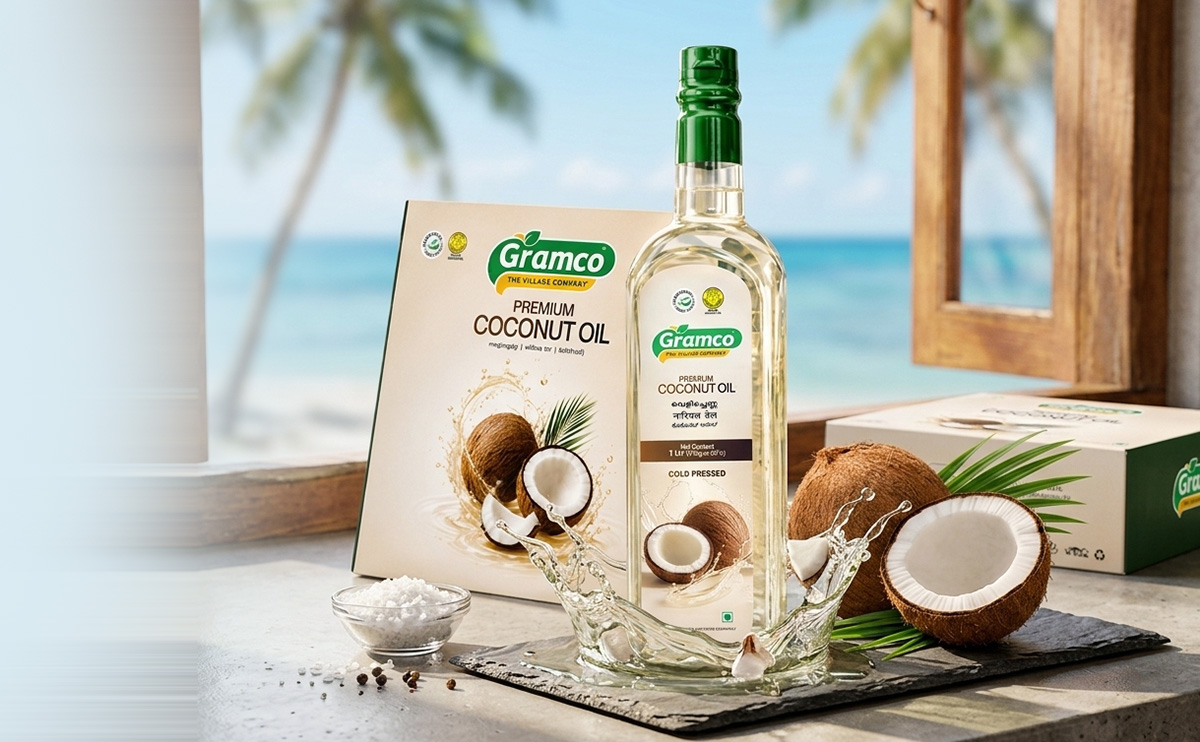
Coconut oil has been an essential part of Indian households for generations, particularly in Kerala, where it is widely used for cooking, hair care, and skincare. With increasing interest in naturally processed food products, cold pressed coconut oil has gained popularity among consumers who value traditional extraction methods and product quality. However, choosing the best seller of pure cold pressed coconut oil involves more than looking at popularity. Factors such as purity, extraction methods, freshness, packaging, and manufacturing standards also play an important role.
Gramco Coconut Oil caters to consumers looking for quality coconut oil products that suit everyday household requirements. Understanding what makes cold pressed coconut oil different can help buyers make informed purchasing decisions.
What Is Pure Cold Pressed Coconut Oil?
Pure cold pressed coconut oil is extracted from coconut kernels using mechanical pressing methods that minimise heat generation during the extraction process. Unlike certain conventional processing methods that involve higher temperatures and additional refining, cold pressing aims to retain the natural characteristics of coconut oil.
The resulting oil is valued for its characteristic coconut aroma, flavour, and versatility. It is a popular choice among consumers who prefer minimally processed oils for their household needs. When purchasing cold pressed coconut oil, checking the product label and manufacturing information helps ensure that the product matches your expectations.
Why Is Pure Cold Pressed Coconut Oil Becoming Popular?
The growing preference for natural and minimally processed food products has increased consumer interest in cold pressed coconut oil. People are becoming more conscious of the ingredients they use in their kitchens and are paying closer attention to how everyday cooking oils are manufactured.
Pure cold pressed coconut oil offers several characteristics that contribute to its popularity.
Minimal Processing: Cold pressing uses mechanical extraction methods and generally involves less intensive processing than conventional refined oils.
Natural Coconut Aroma: Properly produced coconut oil can retain its characteristic coconut aroma and flavour, making it suitable for traditional recipes.
Versatile Usage: Depending on the product specifications, coconut oil can be used for cooking, hair care, and skincare.
Traditional Preference: Coconut oil continues to be an important ingredient in Kerala cuisine, contributing to the distinctive taste of many traditional dishes.
How Is Pure Cold Pressed Coconut Oil Made?
Pure cold pressed coconut oil is produced by extracting oil from prepared coconut kernels through mechanical pressing methods while minimising heat generation. The extracted oil is subsequently filtered to remove unwanted particles before undergoing quality checks and packaging. The selection of good-quality coconuts, appropriate extraction techniques, hygienic handling, and proper storage all contribute to the quality of the final product. Understanding these stages helps consumers appreciate the importance of manufacturing standards when choosing coconut oil.
What Makes a Best-Selling Cold Pressed Coconut Oil?
Product popularity can indicate consumer preference, but it should not be the only consideration when purchasing coconut oil. Several quality characteristics help distinguish a reliable product from ordinary alternatives.
1. Purity and Quality
Purity is one of the most important factors when choosing coconut oil. A quality product should contain the ingredients declared on its label without unnecessary additions or mixing with other oils. Checking the ingredient list, manufacturer details, and product specifications can help consumers understand what they are purchasing.
2. Extraction Method
The extraction method influences the characteristics of coconut oil. Consumers who prefer minimally processed products often choose cold pressed varieties. Understanding how the oil is extracted can help buyers distinguish between different coconut oil products available in the market.
3. Freshness and Packaging
Freshness and packaging are equally important when selecting edible coconut oil. Proper packaging helps protect the oil from contamination and external factors that may affect its quality. Always check the manufacturing date, best-before date, packaging condition, and storage instructions before purchasing.
4. No Unnecessary Additives
Consumers increasingly look for coconut oil without unnecessary artificial colours, fragrances, or additives. Reading the product label is a simple way to understand its composition. Choosing products with transparent ingredient information makes purchasing decisions easier.
5. Trusted Manufacturer
A reliable manufacturer maintains consistent production standards and provides clear product information. Manufacturing practices, quality checks, food safety compliance, and customer confidence are important considerations when selecting a coconut oil brand.
Cold Pressed Coconut Oil vs Regular Coconut Oil
Although both products come from coconuts, their manufacturing methods and final characteristics can differ. Understanding these differences helps consumers select an option that suits their preferences.
| Feature | Cold Pressed Coconut Oil | Regular Coconut Oil |
|---|---|---|
| Extraction | Mechanical pressing with limited heat generation | Varies depending on manufacturing method |
| Processing | Generally less intensive | May involve additional refining |
| Aroma | May retain natural coconut aroma | Depends on processing |
| Flavour | May retain characteristic coconut flavour | Depends on processing |
| Usage | Cooking and other suitable applications | Depends on product specifications |
Neither category should be judged by its name alone. Consumers should consider the manufacturing method, ingredients, quality standards, and intended applications before making a choice.
How to Choose the Right Cold Pressed Coconut Oil for Your Kitchen
Selecting the right coconut oil requires attention to a few important details. First, consider how you intend to use the product. For cooking, always choose food-grade coconut oil that complies with applicable food safety standards.
Next, read the ingredient list and check whether the product contains only the ingredients you expect. Look for clear manufacturing information, appropriate packaging, and storage instructions. It is also worth checking the manufacturer’s quality standards and product certifications.
Avoid making purchasing decisions based solely on price or promotional claims. A product with transparent labelling and reliable manufacturing practices can provide greater confidence in your purchase.
Why Choose Gramco Coconut Oil?
Gramco Coconut Oil caters to consumers who value quality coconut oil for their everyday household needs. Coconut oil has a special place in Kerala’s food culture, and selecting a suitable product is important for households that regularly use it in traditional cooking.
With a focus on coconut oil products, Gramco aims to serve consumers looking for quality and consistency. Whether you are purchasing coconut oil for traditional Kerala dishes or other suitable household applications, understanding product quality, ingredients, and manufacturing standards can help you make an informed decision.
When searching for the Best Seller of Pure Cold Pressed Coconut Oil, consider the factors that genuinely matter, including purity, extraction methods, freshness, packaging, and manufacturer transparency. These considerations are more useful than relying on popularity alone.
Conclusion
Pure cold pressed coconut oil continues to attract attention among consumers who prefer traditionally processed and minimally refined oils. Its extraction method, characteristic coconut aroma, and versatility make it a popular choice for many households, particularly those familiar with Kerala’s traditional cooking practices.
Before purchasing, evaluate the product’s ingredients, manufacturing details, packaging, and intended applications. Choosing a reliable manufacturer is equally important for maintaining confidence in product quality. Gramco Coconut Oil aims to cater to consumers seeking quality coconut oil products while preserving the importance of coconut oil in everyday Indian households.
Frequently Asked Questions
Pure cold pressed coconut oil is extracted from coconut kernels using mechanical pressing methods that minimise heat generation, helping retain the oil’s natural characteristics.
Cold pressed coconut oil is extracted using mechanical methods with limited heat generation, while regular coconut oil may undergo different extraction and refining processes.
Check the ingredient list, extraction method, manufacturer details, packaging, and quality certifications. Choose products with transparent labelling and clear manufacturing information.
Yes, food-grade cold pressed coconut oil can be used for everyday cooking, provided it meets applicable food safety standards and is suitable for the intended cooking method.
Cold pressed coconut oil is commonly used for cooking and, depending on the product, for hair care and skincare routines.
Store coconut oil in a clean, airtight container in a cool, dry place away from direct sunlight. Follow the manufacturer’s storage instructions to maintain its quality.
Kerala has a long tradition of coconut cultivation and coconut oil production. Coconut oil is widely used in traditional Kerala cooking, making it an important part of the region’s food culture.
Look for a reliable manufacturer that provides clear product information, ingredient details, quality standards, and appropriate food-grade packaging. You can also check the available coconut oil products from Gramco.
Pure cold pressed coconut oil does not necessarily require added preservatives. Always check the ingredient list and product label to verify its composition.
Check the extraction method, ingredients, manufacturing and expiry dates, packaging, food safety information, and manufacturer reputation before placing an order.
